The blockchain explained simply.
The blockchain is a foundational new technology with the potential to change our lives. But what is the blockchain, how does it work, and what do cryptocurrencies have to do with it? Join us on an exciting journey through the world of blockchain and discover the fascinating possibilities of this technology.
Blockchain technology has the potential to change our lives, much like the internet did over 30 years ago. Bitcoin and other cryptocurrencies are just one of many applications of blockchain.
Blockchain in four steps.
Blockchain makes online transactions faster and more secure. Learn in four steps how this revolutionary technology works.
Digital
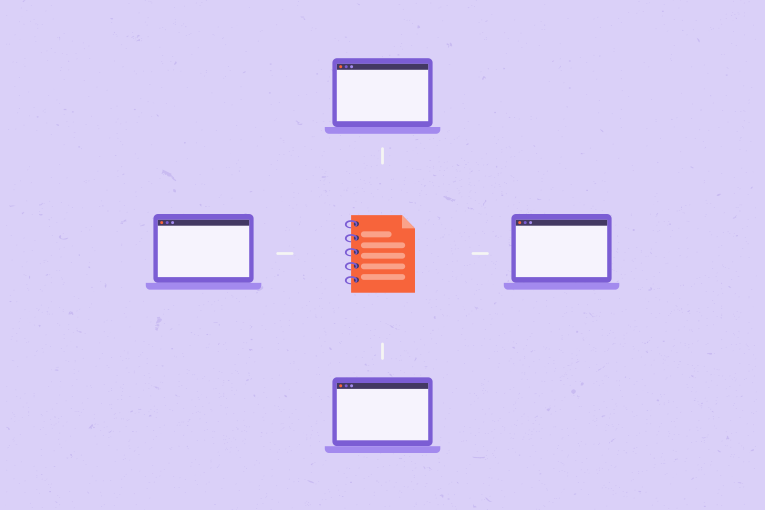
Just imagine a notepad where mutual agreements are recorded. For the planning and optimization of supply chains, data is captured in the blockchain. Producers, suppliers, transport providers, and buyers share information about products, origins, and delivery routes. This increases transparency and planning reliability.
Decentralised
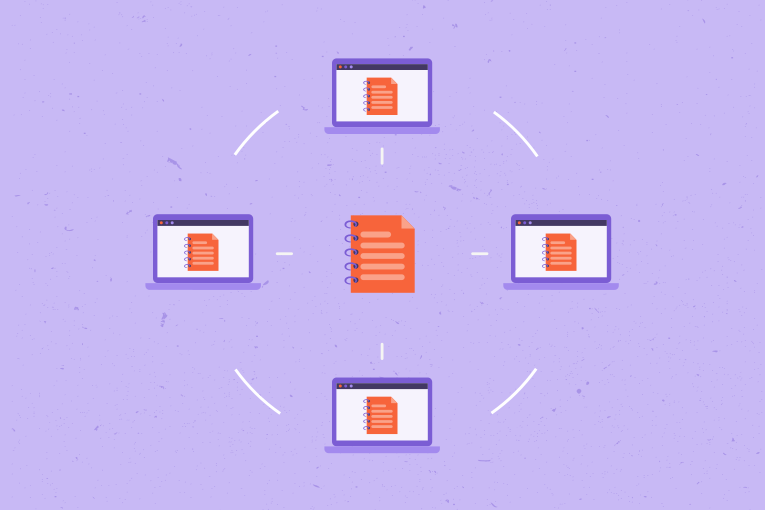
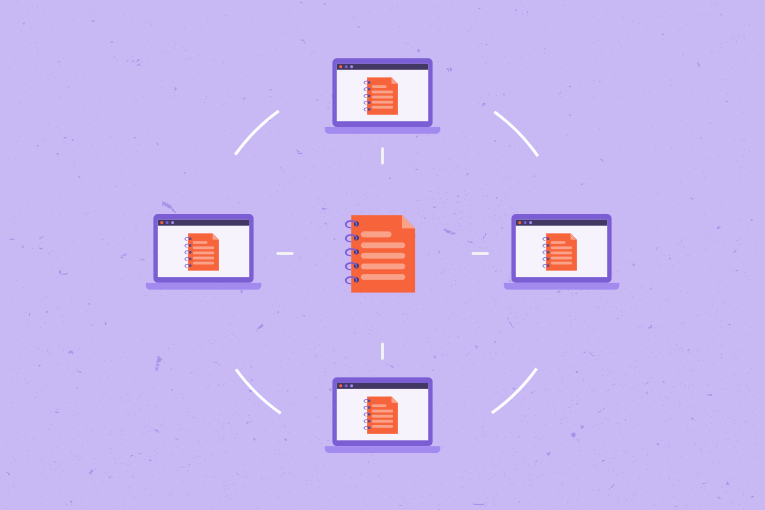
All data is copied to and managed by all participating computers. These computers are equally connected within a network and act as independent control instances. There is no central authority. Every change is monitored and processed by all computers simultaneously.
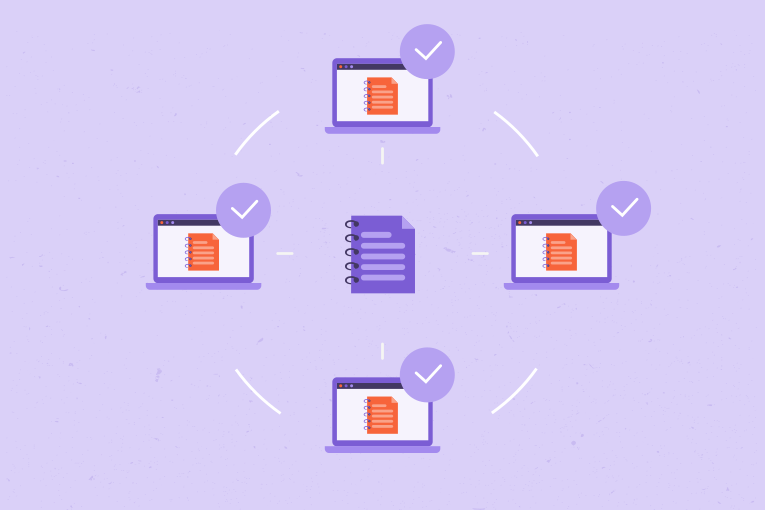
Secure
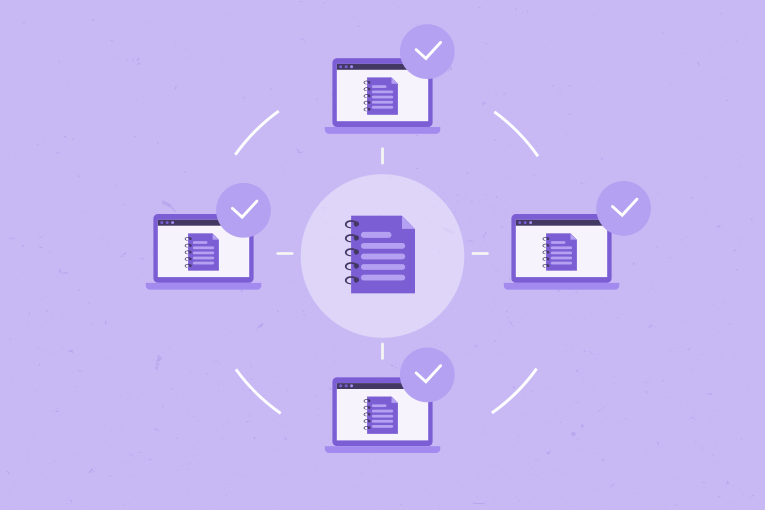
New changes only take effect if a majority of the participants approve them as correct. Then, the change is linked to the previous and following entries. Every computer once again receives a copy of the change.
Transparent
This ensures that the information cannot be manipulated by a single party. It is permanently documented, tamper-proof, and accessible to everyone.
You can think of the blockchain as a kind of digital notebook. Each new transaction is recorded in it. It is public, and everyone can view the recorded transactions. The notebook is continuously copied and sent to participating computers. This prevents any single party from changing the notebook. Changes can't be directly made, they can only be proposed. They are only implemented once the majority of participating computers agree.
The entire history of changes is also visible to everyone in the notebook. Because participating computers verify the blockchain, there is no need for a central authority to oversee it. Since there are many individual computers and no central authority, the blockchain is decentralized.
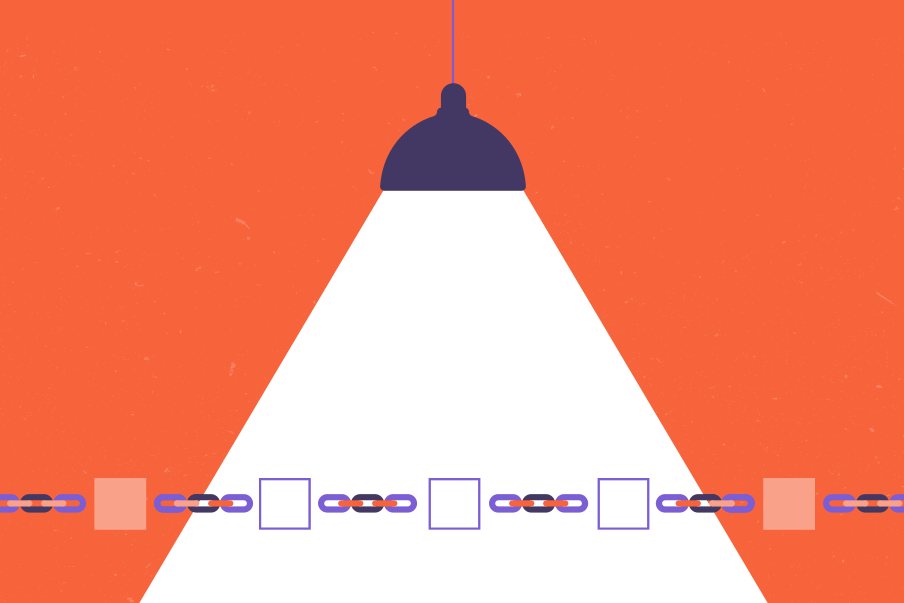
By the way, the new entries in the notebook—or on the blockchain—are grouped together in a "block." These blocks are then added to the existing transactions in the notebook. Instead of thinking of the existing transactions as a notebook, you can now imagine them as a series of blocks connected together. Hence the name "blockchain".
Why the blockchain is revolutionary
The blockchain solves a fundamental problem: the issue of "trust" in a digital world. With blockchain, information can be securely, transparently, and quickly stored and transferred without the need for a central intermediary. This not only saves time and money but also reduces the risk of fraud and abuse. By eliminating the reliance on a trusted third party (such as a bank or government), blockchain enables peer-to-peer transactions where all parties involved can be confident that the data is accurate, unaltered, and verifiable. This increases trust in the system and opens up new possibilities for digital interactions across various sectors, from finance to supply chain management and beyond.
Let's illustrate this with the example of a money transfer. Imagine you're buying a chair on an online marketplace. Since the seller doesn't live nearby, you transfer the money to him electronically.
For this transaction, you need an intermediary, a third party both of you trust. In this case, it's a bank. The bank documents and oversees the transaction, ensuring that the payment reaches the seller and is correctly deducted from your account. The bank charges a fee for this service. It operates centrally and could, in the worst case, go bankrupt. Moreover, centralized systems are generally easier to manipulate.
Alternatively, you could pay for the chair with a cryptocurrency such as Bitcoin (assuming, of course, the seller accepts it and has a wallet to receive the Bitcoin transfer). In this case, you eliminate the bank as the central intermediary. The role of the intermediary is now taken over by the many participating computers in the network. This makes the same transaction more direct, faster, safer, and in some cases, cheaper.
It should be noted that cryptocurrencies—except for
—still experience significant fluctuations in value, making them only partially suitable as a medium of exchange. Additionally, the use of cryptocurrencies is still limited in many countries. Furthermore, maintaining the blockchain—depending on the technology—can consume a significant amount of energy. However, it is expected that these issues will be reduced with the further adoption of cryptocurrencies and technological advancements.Cryptocurrencies like Bitcoin are the most well-known examples based on blockchain technology, but they are just one of many possible applications. Blockchain is highly versatile and could change our lives in significant ways.
Elections: For example, blockchain could provide a secure and transparent system for online elections, where votes are recorded securely and cannot be manipulated. This would enhance trust in the election process, especially in areas concerned with election fraud.
Supply chain: Blockchain can also be used in supply chain management, allowing us to trace the origin of products from source to end consumer. This increases transparency and helps prevent fraud, such as the sale of counterfeit goods, ensuring that products are authentic and ethically sourced.
Ownership: In the context of property ownership, blockchain can be used to create a land registry that securely records ownership. This would prevent land expropriations and protect property rights. While this may not be a significant issue in some countries, it could be crucial in regions where trust in the state is weaker.
The transformative aspect of blockchain lies in its ability to eliminate intermediaries. From platforms like Airbnb and ride-hailing services like Uber to notaries and banks, blockchain could streamline processes, reduce costs, and enhance security across many industries.
It is likely that blockchain will gain importance beyond the financial world. No one knows exactly how the technology will evolve and spread, but one thing is certain: With its ability to store data immutably and conduct transactions without intermediaries, it has the potential to revolutionize many industries and processes. We are witnessing the beginning of a development whose potential has not yet been fully realized. Will it lead humanity to a better future?
This article constitutes neither investment advice nor a solicitation to buy or sell crypto-assets or other financial instruments or to enter into any other financial transactions. The primary purpose of this article is to provide general information. No representations or warranties, express or implied, are made regarding the fairness, accuracy, completeness, or correctness of this article or the opinions contained therein. Therefore, it is not advisable to rely on the fairness, accuracy, completeness, or correctness of this article or the opinions contained therein. Some statements in this article may contain forward-looking expectations based on our current assessments and assumptions. These statements are subject to uncertainties and may cause actual results, performance, or events to differ from the statements made in this article.
Cryptonow and all persons advising or representing it cannot be held liable in any way for this article. It is important to note that investments in crypto-assets carry both risks and opportunities.