The best Bitcoin wallet: offline or online.

Whether it's Bitcoin, Ethereum, or Solana: If you own or trade cryptocurrencies, it's important to know how to store them securely. We will show you the options available so you can decide which is best suited for your situation.
A wallet is essentially nothing more than a digital wallet for cryptocurrencies. It allows you to securely store and send digital assets. A wallet contains both the "Public Address" and the "Private Key." You can think of the "Public Address" like your account number, which allows you to receive cryptocurrencies. So, if your "Public Address" is the account number, then the "Private Key" is the corresponding password. With the private key, you can access your cryptocurrency and send it.
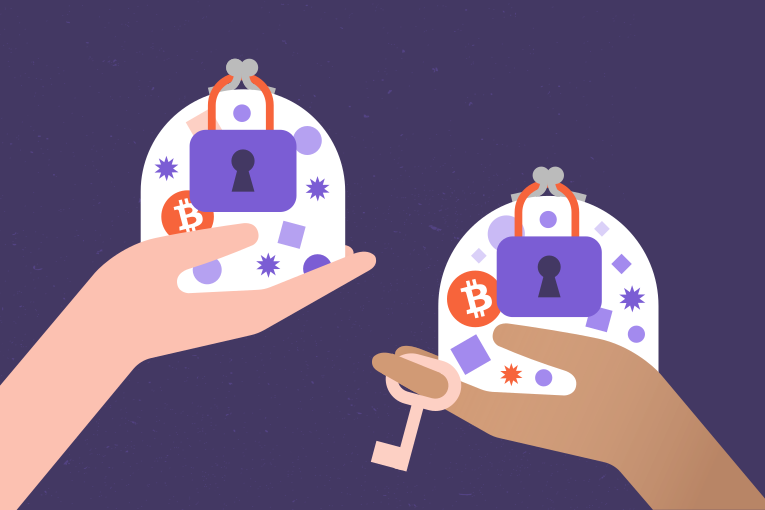
In Brief: Custodial vs. Non-Custodial Storage
There are fundamentally two types of wallets, depending on where your cryptocurrency is stored: Custody or Self-Custody. We will show you how they differ.
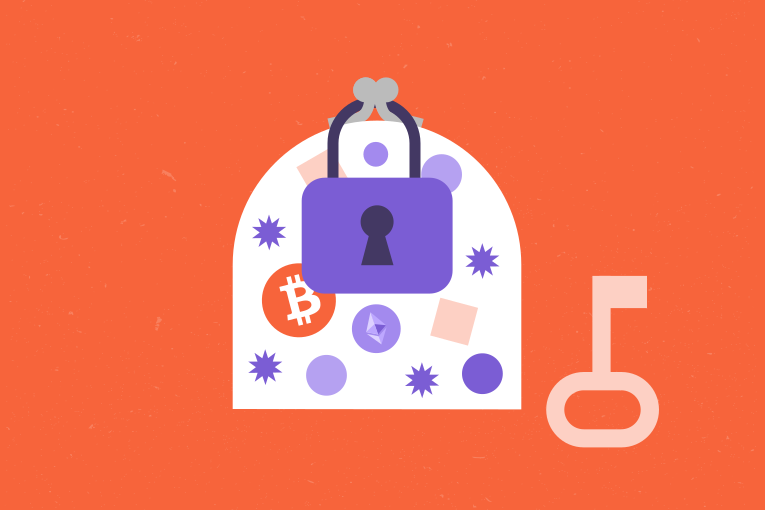
Custody (third-party custody)
Your cryptocurrency is managed online by the crypto exchange. This means your cryptos are always quickly available, and you don't have to worry about their storage.
However, due to online storage, they can become a target for theft, or if the exchange goes bankrupt, your cryptocurrency may, depending on the legal situation, become part of the bankruptcy estate.
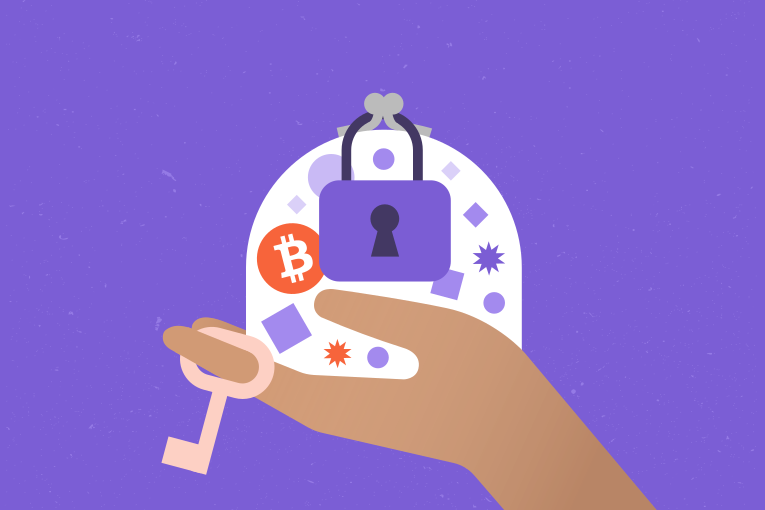
Self-custody
You are the true owner of your cryptocurrency. With this, you have full control. You can choose between online options like apps or offline options such as the Cryptonow Wallet®. The offline option provides you with the highest level of security. Since you have full control, you will lose access to your cryptocurrency if you lose or forget your access credentials.
For maximum security, we always recommend storing your assets in an offline wallet. However, depending on the situation, an online wallet may be more convenient. Let’s take a detailed look at the differences:
| Aspect | Third-party custody | Self-custody |
|---|---|---|
| Responsibility | The platform/broker manages your crypto. | You have full control over your crypto. |
| Advantage | Always available; no need to manage storage yourself. | Enhanced security; you are the true owner (insolvency-proof). |
| Disadvantage | Higher theft risk; risk of loss if the provider goes bankrupt. | High responsibility: If access data is lost, your crypto is gone. |
| Wallets | Online: Brokers or exchanges. | Online: Apps/Desktop; Offline: Hardware/Paper Wallets. |
| Example | Cryptonow Invest® (online) | Cryptonow Wallet® (offline) |
The public address and private key are managed by the
or (for example with Cryptonow Invest®). After purchasing cryptocurrencies, they are stored online in your account for you. The major advantage is that it is very easy and convenient to resell them. However, if you want to store a larger amount of cryptocurrency for the long term, we recommend transferring it to a self-custody wallet. An example of a self-custody wallet is the Cryptonow Wallet®.The public address and private key are protected by an encrypted seed phrase. This makes this type of wallet better protected against theft, as in the event of your smartphone being stolen, the wallet can be restored on another phone or computer. With the app, you have full control over your cryptocurrency. This means that if you lose your access credentials (seed phrase), you will also lose access to your cryptocurrency. For the highest level of security, we recommend offline wallets.
In contrast to online wallets, the private keys are stored offline and are thus protected from online threats. The Cryptonow Wallet® is an example of such an offline wallet. The public key and the private key are noted on the wallet, giving you full control over your cryptocurrencies. However, it is important to store the Cryptonow Wallet® in a safe place and securely keep your private key, as otherwise, access to your cryptocurrencies could be lost.
Depending on the situation, a different type of wallet may be recommended. If you trade cryptocurrencies frequently and use your wallet regularly, an online wallet e.g. on Cryptonow Invest® might be the better choice. However, if you own a large amount of cryptocurrency and want to store it long-term, we recommend the safest option with the Cryptonow Wallet® (cold storage).

In short: storing cryptocurrencies
Here are the three most popular ways to store your cryptocurrencies - simply and clearly summarized:.

Custody with a crypto exchange
Crypto brokers or exchanges store your crypto for you, so you can conveniently keep it online in your account. The downside: you don’t have full control of your Private Keys, and your security depends on the exchange.

Self-custody with an app
With app self-custody, you have full control over your cryptocurrencies. Your "Public Address" and "Private Key" are protected by an encrypted seed phrase. But be careful: if you lose your access credentials, you also lose access to your cryptocurrencies.
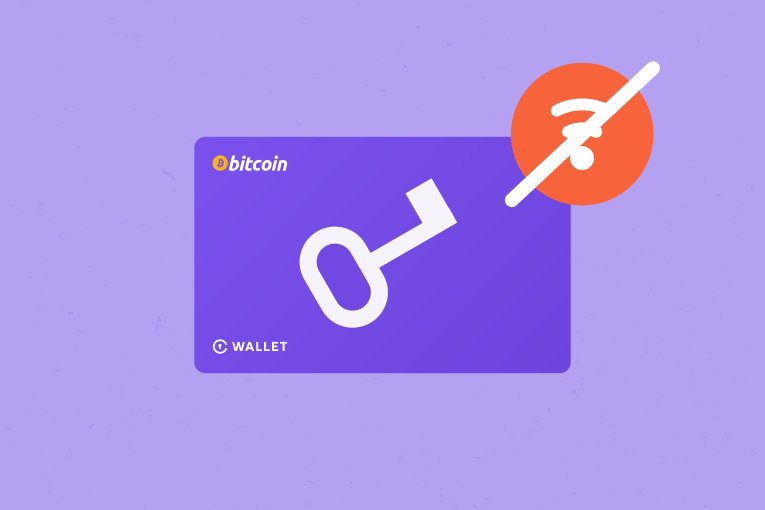
Storing cryptocurrencies offline
In offline storage, the private keys are kept offline, protecting them from online threats. The Cryptonow Wallet® is an example of such a secure offline wallet. The downside is that losing the wallet or private keys can jeopardize access to your cryptocurrencies.
This article constitutes neither investment advice nor a solicitation to buy or sell crypto-assets or other financial instruments or to enter into any other financial transactions. The primary purpose of this article is to provide general information. No representations or warranties, express or implied, are made regarding the fairness, accuracy, completeness, or correctness of this article or the opinions contained therein. Therefore, it is not advisable to rely on the fairness, accuracy, completeness, or correctness of this article or the opinions contained therein. Some statements in this article may contain forward-looking expectations based on our current assessments and assumptions. These statements are subject to uncertainties and may cause actual results, performance, or events to differ from the statements made in this article.
Cryptonow and all persons advising or representing it cannot be held liable in any way for this article. It is important to note that investments in crypto-assets carry both risks and opportunities.