Bitcoin & Crypto: Opportunities and risks.

Every coin or medal has two sides. The same applies to cryptocurrencies like Bitcoin. In the dynamic world of digital currencies, there are numerous opportunities and risks that investors should be aware of. Therefore, we have summarized the key advantages and challenges of investing in Bitcoin and other cryptocurrencies for you.
1. High returns are possible: While no investment guarantees profits, cryptocurrencies like Bitcoin have historically provided very high returns. This potential for significant profits makes them an attractive option for many investors, despite the inherent risks. It's crucial to understand both the opportunities and risks when investing in cryptocurrencies to make informed investment decisions.
2. Independence from currency fluctuations: Cryptocurrencies like Bitcoin are operated by decentralized networks, not controlled by governments or central banks. As a result, Bitcoin and other digital currencies are not tied to traditional fiat currencies like the euro or the dollar. This gives Bitcoin a unique independence and resilience to traditional financial and political influences. This decentralization sets Bitcoin and other cryptocurrencies apart from conventional financial systems, making them an appealing option for investors seeking alternative investment opportunities.
3. Diversification of your investment portfolio: You may have heard the saying, "Don’t put all your eggs in one basket." This means spreading your investments across various assets, such as savings accounts, stocks, gold, and cryptocurrencies like Bitcoin. The broader your investment spread, the lower the risk if one asset performs poorly. This concept is called diversification. Cryptocurrencies like Bitcoin can be seen as a new "basket" that allows you to expand your range of investments. By adding Bitcoin and other digital currencies to your portfolio, you can benefit from their potential while reducing the overall risk of your investments.
4. Lower transaction costs: When you send or receive cryptocurrencies like Bitcoin, transactions occur directly from one computer to another, without the need for intermediaries like banks or credit card companies. As a result, cryptocurrency transactions are typically much cheaper than traditional bank transfers. This peer-to-peer transaction model reduces costs and increases efficiency, providing a significant advantage over conventional money transfers.
5. Participation in the decentralized, digital future of money: Cryptocurrencies were created to make today’s financial system fairer, more efficient, and more stable. By investing in cryptocurrencies, you're part of a large network and growing community that believes in the idea of democratic money and advanced technology. This innovative technology aims to promote financial inclusion and counteract traditional financial barriers. By investing in cryptocurrencies, you're supporting a movement that advances transparency and decentralization in finance, contributing to a fairer global economy.
The inventor of Bitcoin, known by the pseudonym "Satoshi Nakamoto," has never revealed their true identity. It is unknown whether Satoshi is a person or a group of people. To this day, the identity of Satoshi remains a mystery and is a topic of speculation and fascination within the crypto community.
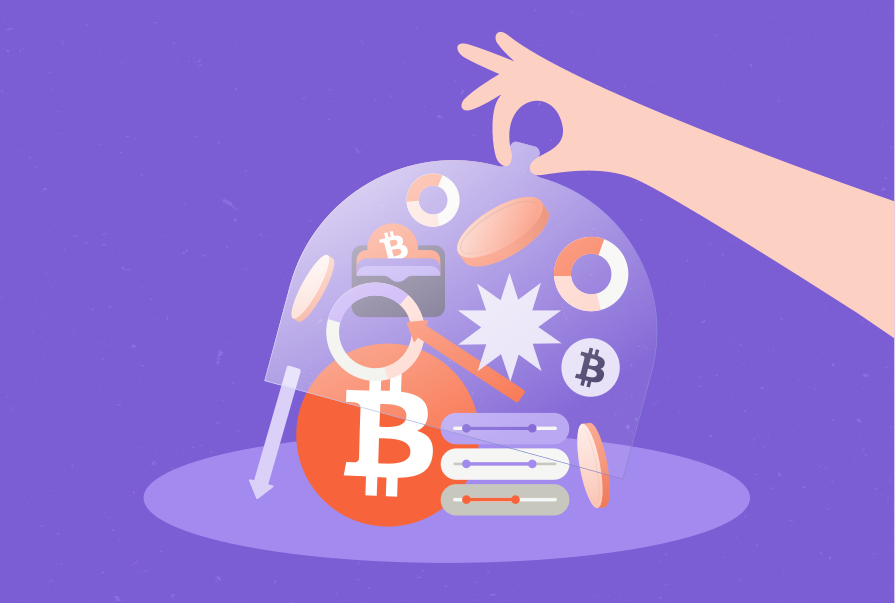
1. High price fluctuations/volatility: The prices of cryptocurrencies can experience extreme fluctuations in a short period of time. This rapid rise and fall is referred to as volatility. When investing in cryptocurrencies, you should expect these fluctuations—both upwards and downwards. Volatility is a characteristic feature of the cryptocurrency market, resulting from factors such as market demand, news events, and regulatory developments. It’s important to be aware of the potential volatility and follow a long-term investment strategy based on informed decisions and risk management.
2. Cryptocurrencies are not universally regulated: Cryptocurrencies are not overseen by a central government authority. For instance, in the case of fraud, there is not always the same level of investor protection as with traditional financial instruments. However, more and more countries are beginning to regulate cryptocurrencies, which contributes to increased security. This regulation can take various forms, such as overseeing cryptocurrency exchanges, implementing KYC (Know Your Customer) and AML (Anti-Money Laundering) policies, and creating clear legal frameworks for the trading and use of cryptocurrencies. Increasing regulation reduces the risk of fraud and illegal activities while strengthening investor confidence in the cryptocurrency market.
3. Fraud cases are not excluded: While blockchain technology itself is considered highly secure, fraud can still occur in the crypto space, especially through unreliable trading platforms or fraudulent ICOs (Initial Coin Offerings). Cyberattacks could potentially lead to the theft of your private keys, allowing unauthorized access to your cryptocurrencies. However, the Bitcoin blockchain itself has never been hacked and is considered extremely secure. Its decentralized nature and encryption techniques make it highly resistant to manipulation or unauthorized access. Nevertheless, it is advisable to take security measures, such as using hardware wallets and selecting trusted trading platforms, to minimize the risk of fraud and theft. This article will show you how to protect yourself from fraud.
4. Limited acceptance: Bitcoin and other cryptocurrencies are gaining increasing popularity worldwide and are being accepted by a growing number of countries, merchants, and businesses. Their adoption is driven by factors such as the rising demand for digital payment methods, interest in innovative financial technologies, and growing recognition of their potential as an asset class. However, despite these positive developments, it is important to note that cryptocurrencies and Bitcoin are not universally accepted. Acceptance can vary depending on the country, industry, and individual preferences, and there are still areas where traditional payment methods dominate. Nevertheless, the ongoing trend toward greater integration of cryptocurrencies into the mainstream suggests that their potential as an alternative payment method and investment class is gaining significant importance. You can learn how to pay with cryptocurrencies in stores here.
5. The responsibility lies with you: As long as you securely store your cryptocurrencies in your wallet and access them with your private key, they are well protected. The potential risk of loss arises if, for example, you lose your wallet or private key. In such a case, there is no central authority that can help recover your lost cryptocurrencies. Therefore, it is crucial to familiarize yourself with how to securely store your Bitcoin and cryptocurrencies and how the technology behind them works. This includes using hardware wallets, regularly backing up your wallet data, and implementing robust security measures to prevent unauthorized access. By actively engaging with the security aspects of cryptocurrencies, you can minimize the risk of loss and ensure the safety of your digital assets.
This article constitutes neither investment advice nor a solicitation to buy or sell crypto-assets or other financial instruments or to enter into any other financial transactions. The primary purpose of this article is to provide general information. No representations or warranties, express or implied, are made regarding the fairness, accuracy, completeness, or correctness of this article or the opinions contained therein. Therefore, it is not advisable to rely on the fairness, accuracy, completeness, or correctness of this article or the opinions contained therein. Some statements in this article may contain forward-looking expectations based on our current assessments and assumptions. These statements are subject to uncertainties and may cause actual results, performance, or events to differ from the statements made in this article.
Cryptonow and all persons advising or representing it cannot be held liable in any way for this article. It is important to note that investments in crypto-assets carry both risks and opportunities.