These 10 countries use Bitcoin & Co. the most.
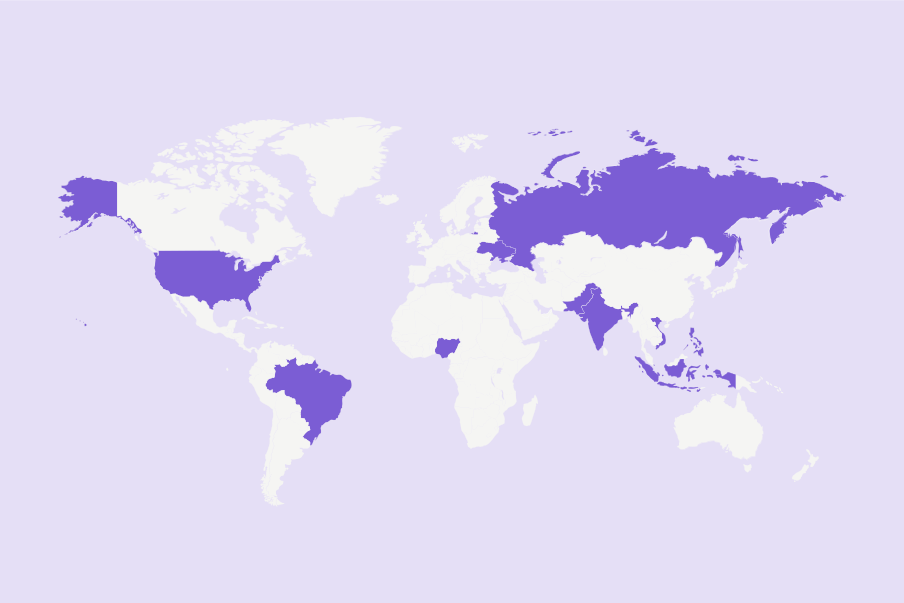
In 2025, India, the USA, and Pakistan lead global crypto adoption. In emerging markets, cryptocurrencies act as protection against inflation and a gateway to finance. In the US and Brazil, institutional momentum drives growth, while Europe is catching up with new regulations.
Just ten years ago, cryptocurrencies were a niche topic for tech enthusiasts. Today, they are a reality for millions of people around the world. Whether as an investment, a hedge against inflation, or a means of payment – Bitcoin & Co. have firmly established their place in the global financial system.
The Chainalysis Global Crypto Adoption Index 2025 highlights just how significant this development has become. It measures where cryptocurrencies are most actively used and offers fascinating insights into why certain regions are leading the way.
These are the ten countries with the highest crypto adoption index score in 2025
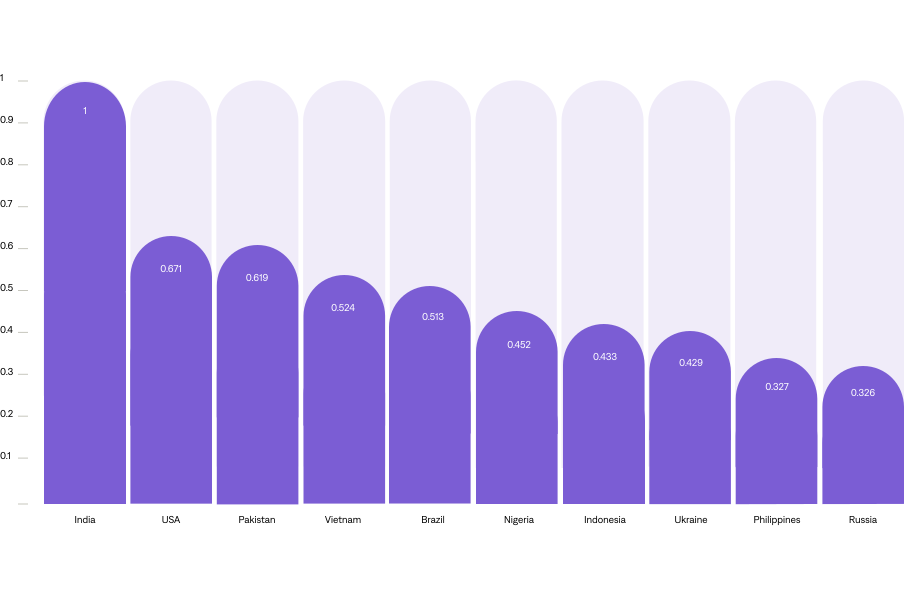
Why these countries?
At first glance, the list is surprising: alongside the USA and India, many emerging markets dominate the top spots. But that’s precisely what illustrates the role cryptocurrencies play when traditional financial systems reach their limits.
Inflation hedge: In countries like Nigeria, Turkey, or Argentina (outside the top 10), citizens face massive currency devaluations. Bitcoin and stablecoins are used here less for speculation and more as a store of value.
Financial inclusion: Around 1.4 billion people worldwide remain unbanked. In Nigeria or Pakistan, cryptocurrencies often replace traditional financial services – all you need is a smartphone.
Digital openness: In Asia – especially in Vietnam, India, and Indonesia – young, tech-savvy populations are driving adoption. For them, crypto isn’t futuristic; it’s a natural extension of their digital lives.
Institutional momentum: In the USA or Brazil, banks, fintechs, and corporations are pushing crypto into the mainstream.
Everyday examples
In Vietnam, a student pays her gym membership with stablecoins – faster and cheaper than a credit card.
In Nigeria, a young software developer receives payment from an international client directly in Bitcoin – without delays or high fees.
In India, millions of small savers regularly invest small amounts in cryptocurrencies – similar to traditional savings plans.
In the USA, companies like PayPal and major retailers experiment with crypto payments – alongside increasing institutional investment.
These everyday stories make it clear: crypto isn’t just abstract technology; it’s a tool that empowers people with new opportunities.
Europe may not yet appear in the top 10 – but the groundwork has been laid. With the MiCA regulation, which came into force at the end of 2024, the EU introduced unified rules for providers and users of cryptocurrencies. Banks, exchanges, and financial service providers are now beginning to integrate crypto into their portfolios.
Countries like Germany, France, and Switzerland are expected to see rapid growth in adoption in the coming years. While usage is still relatively low, the foundation for significant expansion is in place.
The adoption of Bitcoin and other cryptocurrencies has surged in recent years. Today, it’s estimated that over 11 % of the world’s population holds some form of cryptocurrency.

The Chainalysis report also shows where adoption is growing fastest:
Asia-Pacific: nearly +70% on-chain volume growth between 2024 and 2025 – the driving force of global crypto adoption.
Latin America: +63% – cryptocurrencies increasingly used as an alternative to volatile national currencies.
Sub-Saharan Africa: +52% – driven by remittances and limited access to traditional banks.
Europe & North America: moderate growth (42–49%), but at very high transaction volumes, with a focus on institutional investors.
2025 makes one thing clear: cryptocurrencies are no longer an experiment. They are part of everyday life – whether as a hedge against inflation, an easy gateway to global finance, or as an investment.
And while Western markets like the USA strengthen the institutional framework, it’s emerging economies where people are already using cryptocurrencies as a natural part of their daily lives.
The momentum speaks for itself: crypto is here to stay. The next few years will show just how far Bitcoin & Co. will embed themselves into our financial lives.
Sources and further reading:
- Chainalysis (2025): Global Crypto Adoption Index 2025
- Triple-A (2025): Cryptocurrency Ownership Data
-Medium / Quantum Economics (2025): Global Cryptocurrency Adoption in 2025
This article does not constitute investment advice or a solicitation to buy or sell digital assets or other financial instruments or to enter into any other financial transaction. The main purpose of this article is to provide general information. No representations or warranties, express or implied, are made regarding the fairness, accuracy, completeness, or correctness of this article or the opinions contained therein. Therefore, it is advisable not to rely on the fairness, accuracy, completeness, or correctness of this article or the opinions contained herein. Some statements in this article may contain forward-looking expectations based on our current views and assumptions. These statements are subject to uncertainties and may lead to actual results, performance, or events differing from the statements made in this article.
The Cryptonow Group and its subsidiaries, as well as any advisory or representative persons, cannot be held liable in any way for this article.
It is important to note that investing in digital assets carries risks as well as potential gains.